Skip to content

2011

Ubuntu 2.6.39 kernel and fglrx 8.831

glxgears

For those 10.10 Maverick users with 2.6.38 or 2.6.39 (64-bit) kernels, you can get fglrx playing nicely together with X.org 1.9.

Unfortunately this new driver does not support X.org 1.10 and that leaves 11.4 users to use the open-source drivers.

Custom build procedure:

  1. Install the latest 2.6.38 or 2.6.39 kernel revision from Ubuntu Mainline.
  2. Download 64-bit 11.3 from AMD
  3. Extract the files from the package: sh ./ati-driver-installer-11-3-x86.x86_64.run --extract ati
  4. For 2.6.38 and up, download these patches: makefile_compat.patch and 2.6.38_console.patch
  5. For 2.6.39 support, download this additional patch: 2.6.39_bkl.patch
  6. Check for Big Kernel Lock usage: cat /lib/modules/`uname -r`/build/.config | grep -c CONFIG_BKL=y If the result of this command is 0, then download no_bkl.patch as well.
  7. then apply them: cd ati; for i in ../*.patch; do patch -p1 < $i; done
  8. Build your new ati/fglrx deb packages: ./ati-installer.sh 8.831 --buildpkg Ubuntu/maverick
  9. Install our newly created deb packages: sudo dpkg -i ../fglrx*.deb
  10. If your /etc/X11/xorg.conf is missing you will need to run: sudo aticonfig --initial and then reboot.

That newly created package should work for the entire 2.6.38 or 2.6.39 series.

Wireless BCM4312 on Ubuntu with 2.6.38 and 2.6.39 kernel

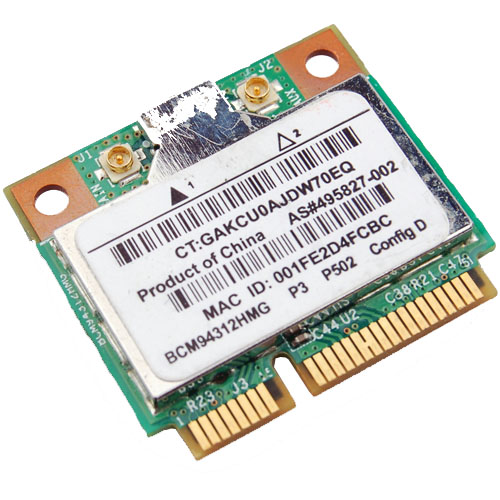
Broadcom Chipset BCM4312

My Vostro 1510 comes with an on-board wireless miniPCI card but it does not work "out of the box" with Ubuntu, even with the latest 2.6.39 kernel. The only option that works for me is the binary hybrid blob driver provided by Broadcom, but even that is out of date. They need help in order to work with 2.6.36 and upwards and I have a patch for that.

Chipsets supported by "Broadcom's IEEE 802.11a/b/g/n hybrid Linux® device driver" are: BCM4311, BCM4312, BCM4313, BCM4321, BCM4322, BCM43224, and BCM43225, BCM43227 and BCM43228.

The my exact chipset from lspci command:

Broadcom Corporation BCM4312 802.11b/g LP-PHY (rev 01)

Below is the error I get with v5_100_82_38 from Broadcom when compiling against 2.6.38 and 2.6.39:

bcurtis@zwartevogel:~/Downloads/wl.org$ make KBUILD_NOPEDANTIC=1 make -C /lib/modules/uname -r/build M=pwd make[1]: Entering directory /usr/src/linux-headers-2.6.38-020638-generic' LD /home/bcurtis/Downloads/wl.org/built-in.o CC /home/bcurtis/Downloads/wl.org/src/shared/linux\_osl.o CC /home/bcurtis/Downloads/wl.org/src/wl/sys/wl\_linux.o /home/bcurtis/Downloads/wl.org/src/wl/sys/wl\_linux.c: In function ‘wl\_attach’: /home/bcurtis/Downloads/wl.org/src/wl/sys/wl\_linux.c:485:3: error: implicit declaration of function ‘init\_MUTEX’ make[2]: \*\*\* Error 1 make[1]: \*\*\* Error 2 make[1]: Leaving directory/usr/src/linux-headers-2.6.38-020638-generic' make: *** Error 2

To get your wireless adapter working again:

  1. Download the 32 or 64-bit version: http://www.broadcom.com/support/802.11/linux_sta.php
  2. Download my patch: broadcom-sta_4_kernel-2.6.38.patch
  3. Extract the sources: cd ~/Downloads; mkdir -p wl; cd wl; tar xf ../hybrid-portsrc*-v5_100_82_38.tar.gz
  4. Patch the sources: patch -p1 < ../broadcom-sta_4_kernel-2.6.38.patch make; sudo make install; sudo depmod; sudo modprobe wl

Give Ubuntu a few seconds after loading the "wl" kernel module, then eventually the Network Manager will start looking for wireless networks.

Update: This patch and the resulting wl kernel module also works with 2.6.39 kernel series. I have updated content above to reflect this.

Infiniband on Ubuntu 10.10 Meerkat

ts

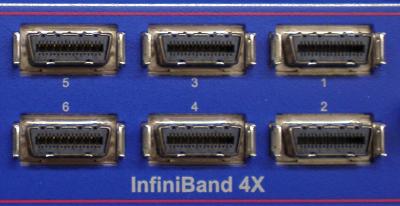
My current project that involves hundreds of mini-ITX Atom machines and we are testing the performance difference between Infiniband and Intel Gigabit NICs.

In my testing the overhead of processing TCP is too high for a dual-core Atom. There is simply not enough processing power to handle the capabilities of the Intel NICs.

A possible solution is to replace TCP by using SDP (RDMA and Zerocopy) over Infiniband. Infiniband equipment has come down significantly in price (dual port 4xSDR card for around $50), which makes it attractive to high-performance and cost-sensitive applications like mine.

In theory we can get 4xSDR speeds (8 Gigabit/s), but the tested result is 1.5 Gigabit/s speeds because of TCP processing over Infiniband. This is almost exactly the performance we achieved using the Intel NICs. We then replaced TCP with SDP over Infiniband. With the switch we saw 4.2 Gigabits/s performance on one process. With two processes, one for each core of the Atom, we saw 7.8 Gigabit/s which is close to the theoretical limit of the Infiniband NIC. It is a significant improvement over the Intel NICs. The limiting factor is number of context switches and interrupts, as a single process would take up 100 % CPU usage. By running two processes we used both cores of the Atom and the full bandwidth of Infiniband.

Unfortunately Ubuntu does not ship SDP in its kernel yet and there is no way to compile just SDP. Our only option was "to throw the baby out with the bath water" by compiling from scratch and overwriting Ubuntu's kernel modules.

Steps for a working Infiniband stack:

  1. Download OpenFabricAlliance (OFA) source package: http://www.openfabrics.org/downloads/OFED/ofed-1.5.3/OFED-1.5.3.1.tgz
  2. Extract and look into srpm directory for the kernel package: rpm2cpio ofa_kernel-*.rpm | cpio -idmv
  3. Extract it and step into the directory: tar xf ofa_kernel-.tgz; cd ofa_kernel*
  4. Configure what modules to compile: ./configure --with-sdp-mod --with-core-mod --with-ipoib-mod --with-ipoib-cm --with-iser-mod --with-mlx4_inf-mod --with-mlx4_en-mod --with-mlx4_core-mod --with-mlx4-mod --with-mthca-mod --with-addr_trans-mod --with-user_access-mod --with-user_mad-mod
  5. Compile and install modules: make; sudo make install
  6. add these to your /etc/modules file: ib_mthca ib_ipoib ib_sdp
  7. Unload all running ib_* modules then load them again or reboot. The reason for this is to make sure you no longer running Ubuntu's IB modules, which will cause symbol conflicts.

Normal TCP usage: iperf -s

To allow seamless SDP usage: LD_PRELOAD=libsdp.so iperf -s

Please note that the shared library overrides the normal creation of sockets, but if SDP cannot be negotiated, then it defaults to TCP. That is why both ends need to LD_PRELOAD libsdp.so in order for SDP to be used.

UPDATE: OFA changed their directory download directory structure and removed the stand-alone kernel source. You now have to download the whole package to get the kernel sources. Instructions are updated above.

Ubuntu 10.10 Maverick with 2.6.38 kernel and fglrx 8.812

glxgears

X-Swat has not updated their ati packages in a long time which means that Natty users and Maverick users with 2.6.38 (64-bit) cannot run with fglrx video drivers.

In order to get the latest 2.6.38 kernel and fglrx playing nicely together you will need to build these packages yourself.

Custom build procedure:

  1. Install the latest 2.6.38 kernel revision from Ubuntu Mainline.
  2. Download 11.1 from AMD
  3. Extract the files from the package: sh ./ati-driver-installer-11-1-x86.x86_64.run --extract ati
  4. Download the patch here, then apply it: cd ati; patch -p1 < ../2.6.38_console.patch
  5. Build our new ati/fglrx deb packages: ./ati-installer.sh 8.812 --buildpkg Ubuntu/maverick
  6. Install our newly created deb packages: sudo dpkg -i ../fglrx*.deb
  7. If your /etc/X11/xorg.conf is missing you will need to run: sudo aticonfig --initial and then reboot.

That newly created package should work for the entire 2.6.38 series.